“Can scoliosis be corrected?” is one of the most common questions asked by patients diagnosed with scoliosis and their families. Many people who learn they have a spinal curvature begin to research whether the condition will go away completely, whether it will progress over time, and which treatment methods are effective. This question becomes particularly important in cases of scoliosis detected during childhood and adolescence.

Scoliosis is a structural spinal condition characterized by a lateral curvature of the spine and rotation around its own axis. However, not all cases of scoliosis are the same. While some mild curvatures may remain stable for many years, in other cases the spinal curvature may progress as the patient grows. For this reason, the answer to the question “Can scoliosis be corrected?” varies from person to person.

Whether scoliosis can be completely corrected depends on the severity of the curvature, the patient’s age, growth potential, and the type of scoliosis. In some cases, regular follow-up and exercise are sufficient, while in others, bracing or surgery may be necessary.

In this comprehensive resource prepared by the team led by Prof. Dr. Çağatay Öztürk, the scientific answer to the question "Can scoliosis be corrected?" is addressed in detail, along with the circumstances under which improvement may occur and how the treatment process is planned.


Can Scoliosis Be Corrected, and Can Spinal Curvature Be Completely Corrected?

The first answer to the question "Can scoliosis be corrected?" is this: Not all cases of scoliosis follow the same course. Therefore, whether scoliosis can be completely corrected must be assessed on a case-by-case basis.

In some cases of mild scoliosis, the spinal curvature may remain stable for many years without progressing. In particular, once the growth phase is complete, some curvatures may remain at the same level throughout life without showing any significant changes. However, in cases of structural scoliosis, it is generally not expected that the spinal curvature will resolve completely on its own.

What matters here is not merely the complete elimination of the curvature. The primary goal is to maintain spinal balance, halt the progression of the condition, and preserve the patient’s quality of life. This is because many patients with scoliosis can lead active and healthy lives with appropriate follow-up and treatment.


Can Mild Scoliosis Be Corrected?

One of the most common situations in which the question "Can scoliosis be corrected?" is asked involves mild scoliosis. In cases of mild curvature, regular follow-up may be sufficient. Mild scoliosis can remain stable for many years, particularly in individuals with limited growth potential.

Some mild postural curvatures may be associated with poor posture, and appropriate exercise programs can help improve their appearance. However, it is important to distinguish between true structural scoliosis and poor posture.

For this reason, the type and degree of spinal curvature should be determined by a specialist. Not all cases of spinal curvature require the same approach.


Can Scoliosis in Children Be Corrected?

Cases of scoliosis that occur during childhood require special attention. This is because the risk of the spinal curvature progressing is higher while growth is still ongoing. In particular, the rapid growth phase during adolescence can affect the course of scoliosis.

In some cases of mild childhood scoliosis, regular follow-up may be sufficient. However, in cases where there is a risk of progression, bracing may be recommended. The goal here is to prevent the spine from curving further as the child grows.

The question “Can scoliosis be corrected?” is often interpreted as “Can its progression be stopped?” in pediatric patients. This is because early intervention can help ensure that spinal development proceeds in a more controlled manner.


Can Scoliosis Be Corrected During Adolescence?

Adolescence is one of the most critical periods for scoliosis. This is because the spine continues to grow rapidly during this time. The risk of the curvature progressing can become particularly pronounced during this period.

While the curvature remains stable in some patients, an increase in the Cobb angle may be observed in other cases. For this reason, regular follow-up is of great importance. In particular, changes at shoulder level, an increase in the prominence of the back, or a worsening of postural abnormalities should be carefully evaluated.

Thanks to changes detected early on, the treatment plan can be adjusted in a timely manner. The goal of this process is not only to reduce the curvature but also to preserve spinal health.


Can Scoliosis Be Corrected in Adults?

Adult scoliosis is evaluated differently from scoliosis in childhood. This is because growth has ceased and the spinal structure has become more stable. The primary goals of adult scoliosis treatment are to reduce pain, maintain spinal alignment, and improve quality of life.

In some adult patients, significant relief can be achieved through physical therapy, exercise programs, and lifestyle modifications. In more severe cases, surgical treatment options may be considered.


Can exercise correct scoliosis?

Along with the question “Can scoliosis be corrected?”, one of the most frequently searched topics is the effectiveness of exercises. Spinal exercises can make a significant contribution, particularly in terms of maintaining muscle balance and supporting posture.

However, it is important to note that not every exercise is suitable for scoliosis. Instead of random exercises found online, personalized exercise programs should be preferred.

Properly planned exercises:

  • can help maintain muscle balance
  • can improve posture
  • can help reduce pain
  • can improve spinal control

However, the goal of the exercises is not always to straighten the spine completely. The treatment approach should be determined based on the degree of curvature.


Does a Scoliosis Brace Correct Scoliosis?

Brace therapy is one of the key treatment methods used, particularly in children during their growth phase. The primary goal of using a brace is to slow the progression of scoliosis.

In some suitable cases, a certain degree of improvement in the curvature may be observed with a brace. However, a brace is not suitable for every patient, and it is not expected to completely correct every case of scoliosis.

When preparing a treatment plan:

  • degree of curvature
  • growth potential
  • type of scoliosis

are taken into account.

For this reason, corset therapy must be planned under the supervision of a specialist.


Can Scoliosis Be Corrected with Surgery?

In cases of severe scoliosis, surgical treatment options may be considered. Surgery may be considered, particularly for curves that are progressing and significantly disrupting spinal alignment.

The goal of surgical treatment:

  • correct spinal curvature
  • to halt progress
  • is to maintain spinal alignment

However, not every patient with scoliosis needs surgery. The decision to operate is made after considering the severity of the curvature, the patient’s symptoms, and their quality of life.


Will Scoliosis Correct Itself If Left Untreated?

Spontaneous complete correction of untreated structural scoliosis is generally not expected. While some mild curvatures may remain stable, cases of progressive scoliosis—especially during the growth phase—should be closely monitored.

As scoliosis progresses:

  • postural problems may worsen
  • back and lower back pain may develop
  • spinal alignment may be disrupted

That is why early assessment is important.


Can Scoliosis Be Corrected, and Why Is Early Diagnosis Important?

The most important aspect of the question "Can scoliosis be corrected?" is early diagnosis. When the curvature is detected early on, the condition can be managed more effectively.

Especially in children:

  • regular monitoring
  • appropriate exercise program
  • corset therapy when necessary

can help reduce the risk of moving forward.

Early intervention can help preserve spinal health and improve quality of life.


Conclusion: Can Scoliosis Be Corrected?

The answer to the question “Can scoliosis be corrected?” depends on the type and severity of the condition. While some mild curvatures may remain stable, in other cases treatment and regular follow-up may be necessary. Rather than completely eliminating scoliosis, the focus is on maintaining spinal health and preventing the condition from progressing.

Early diagnosis and a personalized treatment approach play a significant role in the management of scoliosis. For this reason, a specialist evaluation should not be overlooked in individuals with suspected spinal curvature.

“What happens if scoliosis progresses?” is one of the most frequently asked questions by individuals diagnosed with scoliosis and their families. This is because scoliosis is not merely a condition limited to a mild curvature of the spine. While some patients may have curves that remain stable for years, in other cases, the spinal curvature may worsen over time and affect the body’s overall biomechanics. The risk of scoliosis progression must be carefully assessed, particularly in children and adolescents who are still growing.

The progression of scoliosis is not merely a matter of cosmetic appearance. As the curvature of the spine increases, it can affect muscle structure, postural balance, the distribution of load on the spine, and in some cases, even the respiratory system. For this reason, it is important to monitor scoliosis regularly and accurately assess the risk of progression. As the degree of spinal curvature increases, some patients may experience pain, limited mobility, and a decrease in quality of life.

In this comprehensive resource prepared by Prof. Dr. Çağatay Öztürk and his team, the question of what happens if scoliosis progresses is addressed in detail, along with the effects of progressive scoliosis on the body and the symptoms that require careful evaluation.


What Happens If Scoliosis Progresses, and How Does It Affect the Spine?

The answer to the question “What happens if scoliosis progresses?” can vary depending on the degree of curvature in the spine and the patient’s growth potential. Under normal conditions, the spine has a structure that keeps the body balanced and ensures an even distribution of weight. However, as scoliosis progresses, this balance is disrupted, and the body begins to develop compensatory mechanisms in different areas to maintain a new equilibrium.

One of the first noticeable changes in progressive scoliosis is the worsening of postural abnormalities. The difference in shoulder levels may increase, the shoulder blades may become more prominent, and the curves of the lower back may appear asymmetrical. These changes may become more pronounced, especially in adolescents, due to rapid growth.

An increase in spinal curvature does not merely affect one’s appearance. It also causes an uneven distribution of load on the vertebrae, discs, and muscles surrounding the spine. Over time, this can lead to muscle fatigue, a feeling of tension, and chronic pain.


What Happens If Scoliosis Progresses, and Does It Cause Pain?

One of the most important answers to the question "What happens if scoliosis progresses?" relates to pain. Back and lower back pain are more common in cases of progressive scoliosis, particularly among adults. The primary cause of this is the disruption of the spine’s natural biomechanics.

As the spine curves, certain muscle groups begin to work harder than usual to keep the body balanced. This can lead to muscle spasms and a feeling of chronic fatigue. While some patients describe the pain as a sensation of increasing pressure by the end of the day, others report difficulty standing or sitting for long periods.

In advanced cases of scoliosis, the load on the spinal joints may increase. Especially in adult scoliosis, pain may become more pronounced as degenerative changes set in. In some cases, nerve roots may be affected, leading to pain that radiates down the leg.


What Happens If Scoliosis Progresses, and Does Postural Deformity Worsen?

One of the most noticeable effects of progressive scoliosis is changes in posture. As the spinal curvature increases, the body’s symmetry may be disrupted. In particular, differences in shoulder height, a protrusion in the back, and a shift in the torso may become more pronounced.

In some patients, one shoulder may appear higher than the other, while in others, asymmetry at hip level may be noticeable. This condition can also have psychological effects, particularly in adolescents.

As scoliosis progresses, a person’s gait and overall posture may change. It may become more difficult to stay in the same position for long periods of time, and the body may tire more quickly.


What Happens If Scoliosis Progresses, and Does It Affect the Respiratory System?

One of the key answers to the question "What happens if scoliosis progresses?" is its impact on the respiratory system. In particular, severe curves in the thoracic region—that is, the upper back—can affect the structure of the rib cage.

Rotation of the spine can disrupt the symmetry of the rib cage and reduce the lungs’ capacity to expand. This can lead to symptoms such as shortness of breath, fatigue, and a decreased ability to exercise, particularly in cases of severe scoliosis.

Not all patients with scoliosis experience breathing difficulties. However, this risk must be carefully assessed in cases of severe curvature. For this reason, regular follow-up and early intervention are of great importance.


What Happens If Scoliosis Progresses, and Are There Any Psychological Effects?

Scoliosis is not merely a physical spinal problem. Changes in physical appearance, particularly among younger individuals, can have psychological effects. In cases of progressive scoliosis, as shoulder asymmetry, trunk curvature, or a protrusion in the back become more pronounced, some individuals may develop self-esteem issues.

Especially during adolescence, as the process of adapting to one’s social environment continues, changes in physical appearance may be perceived more acutely. For this reason, scoliosis treatment should take into account not only radiological evaluation but also the patient’s psychological state.

Some patients may avoid physical activities or feel uncomfortable in social settings. For this reason, scoliosis must be evaluated holistically.


What Happens If Scoliosis Progresses, and How Does It Affect Daily Life?

Progressive scoliosis can also have a significant impact on daily life. The strain on the upper and lower back may be felt more acutely, particularly in people who spend long hours sitting at a desk, standing, or engaging in physical activity.

Some patients may experience persistent fatigue. By the end of the day, they may feel a burning sensation in the back, muscle stiffness, or discomfort when moving. In cases of severe curvature, mobility may be reduced and spinal flexibility may be affected.

For this reason, scoliosis should not be viewed merely as an aesthetic issue. A curvature of the spine can affect the body’s overall musculoskeletal system.


What Happens If Scoliosis Progresses, and Which Patients Are at Higher Risk?

When answering the question "What happens if scoliosis progresses?", it is important to understand which patients are at higher risk of progression. The likelihood of scoliosis progressing is particularly higher in children who are still growing. This is because as the spine continues to develop, the curvature can increase along with growth.

A high Cobb angle, early diagnosis, and being in a period of rapid growth can increase the risk of progression. In addition, some types of scoliosis may have a more aggressive course.

For this reason, regular follow-up is of great importance for individuals diagnosed with scoliosis. The degree of curvature and the rate of progression should be assessed at regular intervals.


What Happens If Scoliosis Progresses, and What Problems Can Arise If Treatment Is Delayed?

In cases of progressive scoliosis that are left untreated or not regularly monitored, spinal alignment may deteriorate further over time. This can lead to problems such as chronic pain, noticeable postural abnormalities, and limited mobility.

In some advanced cases, chest capacity may be affected, and pressure may be placed on the respiratory system. Additionally, an uneven distribution of weight on the spine can lead to the earlier onset of degenerative changes as people age.

However, the key point here is that not every case of scoliosis progresses in the same way. For this reason, an individualized assessment must be conducted.


What Happens If Scoliosis Progresses, and Why Is Early Intervention Important?

The most important aspect of the question "What happens if scoliosis progresses?" is the importance of early intervention. In cases of scoliosis detected at an early stage, the risk of progression can be monitored more closely, and an appropriate treatment plan can be developed.

While regular monitoring may be sufficient for some mild curvatures, a brace may be recommended in certain cases. For severe curvatures, surgical treatment options may be considered. The primary goal here is to preserve the spine’s balanced structure as much as possible.

Early evaluation can help preserve not only the degree of curvature but also the patient’s quality of life and spinal health.

The answer to the question “What happens if scoliosis progresses?” is not limited to an increase in the curvature of the spine. Progressive scoliosis can lead to various effects, such as poor posture, back and lower back pain, muscle imbalance, limited mobility, and, in some cases, breathing difficulties. Regular follow-up is particularly important for children who are still growing.

Early evaluation of scoliosis, accurate assessment of the risk of progression, and determination of an appropriate treatment approach play a critical role in maintaining spinal health.


Frequently Asked Questions (FAQ)

Does pain increase if scoliosis progresses?

As scoliosis progresses, the distribution of weight on the spine changes, which can make back and lower back pain more pronounced. Chronic pain is particularly common in adult scoliosis.


If scoliosis progresses, is surgery necessary?

Not all cases of progressive scoliosis require surgery. The decision regarding treatment is based on the severity of the curvature, the rate of progression, and the patient’s quality of life.


If scoliosis progresses, will it cause shortness of breath?

In severe cases of thoracic scoliosis, the rib cage may be affected, which can reduce lung capacity. However, not all patients with scoliosis develop breathing problems.

Skolyoz ile ilgili detaylı rehberlerimiz için tıklayınız.

“Skolyoz ağrısı nerelerde olur?” sorusu, omurga eğriliği tanısı alan veya duruş bozukluğu yaşayan birçok kişinin merak ettiği konular arasında yer alır. Skolyoz yalnızca omurganın yana doğru eğrilmesiyle sınırlı bir durum değildir. Omurgadaki bu yapısal değişiklik zamanla kasları, eklemleri, bağ dokularını ve vücudun genel duruş dengesini etkileyebilir. Bu nedenle skolyoz hastalarında görülen ağrılar yalnızca sırt bölgesinde ortaya çıkmaz; boyun, bel, omuz ve hatta bazı durumlarda kalça ve bacaklara kadar yayılan şikayetler görülebilir.

Skolyozun neden olduğu ağrıların şiddeti kişiden kişiye değişebilir. Bazı bireylerde yalnızca hafif bir kas yorgunluğu hissedilirken, bazı hastalarda günlük yaşamı etkileyen kronik ağrı problemleri gelişebilir. Özellikle erişkin yaş grubunda skolyozun oluşturduğu mekanik yük dağılımı zamanla omurga çevresindeki dokularda zorlanmaya neden olur. Bu durum uzun süre devam ettiğinde ağrı daha belirgin hale gelir.

Bu içerikte, skolyoz ağrısının hangi bölgelerde görülebileceği, ağrının neden oluştuğu ve hangi durumlarda uzman değerlendirmesi gerektiği detaylı şekilde ele alınmaktadır.

Skolyoz Her Zaman Ağrı Yapar mı?

Skolyoz her hastada aynı belirtileri oluşturmaz. Özellikle çocukluk ve ergenlik dönemindeki hafif eğriliklerde ağrı hiç görülmeyebilir. Bu nedenle birçok skolyoz vakası ilk olarak omuz seviyesindeki asimetri, kürek kemiğindeki çıkıntı veya duruş bozukluğu fark edildiğinde ortaya çıkar. Ağrının olmaması, skolyozun ilerlemediği anlamına da gelmez. Bazı hastalarda omurgadaki eğrilik belirgin olmasına rağmen uzun süre ağrı oluşmayabilir.

Ancak omurga üzerindeki yük dağılımı değiştikçe vücut bu dengesizliği telafi etmeye çalışır. Omurgayı destekleyen kasların bazıları normalden fazla çalışırken bazı bölgelerde hareket kısıtlılığı oluşabilir. Bu durum zamanla kas yorgunluğu, gerginlik hissi ve kronik ağrıya yol açabilir. Özellikle yetişkin skolyozunda ağrı şikayetleri çocukluk dönemine göre çok daha sık görülür.


Skolyozda Sırt Ağrısı Neden Oluşur?

Skolyoz hastalarında en sık görülen şikayetlerden biri sırt ağrısıdır. Özellikle torakal bölgede, yani sırt omurlarını etkileyen eğriliklerde bu durum daha belirgin hale gelir. Omurganın eğrilmesiyle birlikte sırt kaslarının çalışma dengesi bozulur. Eğriliğin bir tarafındaki kaslar sürekli gerilmiş halde kalırken diğer tarafta kısalma meydana gelebilir. Bu asimetrik yük dağılımı zamanla kas spazmlarına ve ağrıya neden olur.

Birçok hasta sırt bölgesindeki ağrıyı “yanma”, “baskı hissi” veya “gün sonunda artan yorgunluk” şeklinde tarif eder. Uzun süre masa başında oturmak, ayakta kalmak veya ağır yük taşımak ağrının belirginleşmesine neden olabilir. Özellikle omurganın dönme hareketi yaptığı durumlarda kürek kemiği çevresinde rahatsızlık hissi daha fazla ortaya çıkar.

Bazı hastalarda ağrı yalnızca kas kaynaklı olurken, ileri dereceli eğriliklerde omurga eklemleri ve bağ dokuları da sürece dahil olabilir. Bu durum ağrının daha kronik hale gelmesine neden olabilir.


Bel Ağrısı ve Skolyoz Arasındaki İlişki

Bel ağrısı, özellikle lomber skolyoz olarak adlandırılan bel bölgesi eğriliklerinde sık görülür. Omurganın normal hizasının bozulması, bel bölgesindeki diskler ve küçük eklemler üzerinde dengesiz yük oluşmasına yol açar. Vücut dengeyi korumaya çalışırken bazı bölgelerde aşırı baskı oluşabilir.

Bu durum başlangıçta yalnızca hareket sonrası ortaya çıkan hafif rahatsızlık şeklinde hissedilebilir. Ancak zamanla kronik bel ağrısı gelişebilir. Özellikle uzun süre ayakta duran veya ağır fiziksel aktivite yapan kişilerde şikayetler belirgin hale gelebilir.

Yetişkin skolyozunda bel ağrısının en önemli nedenlerinden biri dejeneratif değişikliklerdir. Yaş ilerledikçe disk yapılarında yıpranma meydana gelir ve skolyozun oluşturduğu yük dengesizliği bu süreci hızlandırabilir. Bu nedenle bazı hastalarda skolyoz ile birlikte bel fıtığı veya sinir sıkışması gibi problemler de görülebilir.


Boyun ve Omuz Ağrıları Skolyozla İlişkili Olabilir mi?

Skolyoz yalnızca omurganın eğrildiği bölgeyi etkilemez. Vücut genel dengeyi koruyabilmek için farklı bölgelerde kompansasyon mekanizmaları geliştirir. Özellikle baş pozisyonunun dengede tutulabilmesi için boyun kasları normalden daha fazla çalışabilir. Bu durum boyun ağrısı, ense sertliği ve omuzlarda gerginlik hissine neden olabilir.

Bazı hastalarda uzun süre bilgisayar kullanımı veya masa başı çalışma sonrası baş ağrısı gelişebilir. Bunun temel nedeni çoğu zaman boyun kaslarının sürekli yük altında kalmasıdır. Ayrıca omuz seviyelerinin eşit olmaması da omuz çevresindeki kasların dengesiz çalışmasına yol açabilir.

Kürek kemiği çevresinde hissedilen batıcı veya yanıcı ağrı, skolyoz hastalarının sık tarif ettiği şikayetlerden biridir. Özellikle tek taraflı kas yüklenmesi bu bölgede belirgin rahatsızlık oluşturabilir.


Skolyoz Kalça ve Bacak Ağrısına Neden Olabilir mi?

İleri dereceli skolyoz vakalarında yalnızca omurga değil, pelvis yani kalça dengesi de etkilenebilir. Omurgadaki eğrilik nedeniyle vücudun ağırlık merkezi değişir ve bu durum kalça eklemleri üzerinde asimetrik yük oluşturabilir.

Bazı hastalarda kalça ağrısı yürüyüş sırasında belirgin hale gelirken, bazı durumlarda bacağa yayılan ağrılar görülebilir. Özellikle sinir köklerinin baskı altında kaldığı durumlarda siyatik benzeri ağrı gelişebilir. Bu ağrı bazen uyuşma veya karıncalanma ile birlikte hissedilebilir.

Her bacak ağrısı skolyoz anlamına gelmese de, skolyoz hastalarında bu tür belirtilerin dikkatle değerlendirilmesi gerekir.


Skolyoz Ağrısı Günlük Yaşamı Nasıl Etkiler?

Skolyozun neden olduğu ağrılar zamanla kişinin yaşam kalitesini etkileyebilir. Sürekli kas yorgunluğu hissi, hareket sırasında rahatsızlık ve uzun süre aynı pozisyonda kalamama gibi durumlar günlük yaşamı zorlaştırabilir.

Bazı hastalar gün sonunda belirgin tükenmişlik hissederken, bazı kişiler fiziksel aktivitelerden kaçınmaya başlayabilir. Özellikle ağrının kronik hale gelmesi, uyku düzeni ve psikolojik durum üzerinde de etkili olabilir.

Bu nedenle skolyoz yalnızca “omurgada eğrilik” olarak değerlendirilmemeli, vücudun genel biyomekaniğini etkileyen bir durum olarak ele alınmalıdır.


Hangi Belirtiler Daha Ciddi Problemlerin İşareti Olabilir?

Skolyoz kaynaklı ağrılar çoğu zaman kas ve duruş problemleriyle ilişkilidir. Ancak bazı belirtiler daha dikkatli değerlendirilmelidir. Özellikle gece uykudan uyandıran ağrılar, hızlı ilerleyen şikayetler veya nörolojik belirtiler uzman değerlendirmesi gerektirebilir.

Bacaklarda güç kaybı, uyuşma, denge problemi veya nefes darlığı gibi belirtiler omurga üzerindeki baskının arttığını gösterebilir. Özellikle ileri dereceli eğriliklerde göğüs kafesi kapasitesi etkilenebilir ve bu durum solunum problemlerine yol açabilir.

Bu nedenle skolyoz hastalarında ağrının karakteri, süresi ve eşlik eden belirtiler dikkatle değerlendirilmelidir.


Skolyoz Ağrısı Nasıl Kontrol Altına Alınır?

Scoliosis ağrısının yönetiminde temel amaç yalnızca ağrıyı azaltmak değil, omurga üzerindeki yük dağılımını daha dengeli hale getirmektir. Tedavi planı, eğriliğin derecesine, hastanın yaşına ve günlük yaşam üzerindeki etkilerine göre belirlenir.

Fizik tedavi uygulamaları, omurga çevresindeki kasların dengeli çalışmasına yardımcı olabilir. Özellikle postür eğitimi ve kontrollü egzersiz programları kas dengesizliğinin azaltılmasında önemli rol oynar. Bunun yanı sıra yaşam tarzı düzenlemeleri de ağrı kontrolünde etkili olabilir.

İleri dereceli eğriliklerde ise cerrahi tedavi seçenekleri değerlendirilebilir. Ancak her skolyoz hastasında ameliyat gerekli değildir. Tedavi yaklaşımı kişiye özel planlanmalıdır.


“Skolyoz ağrısı nerelerde olur?” sorusunun cevabı yalnızca tek bir bölgeyle sınırlı değildir. Skolyoz, omurgadaki dengeyi etkileyen kompleks bir durum olduğu için sırt, bel, boyun, omuz ve hatta kalça bölgesine kadar yayılan farklı ağrılara neden olabilir. Ağrının nedeni çoğu zaman omurgadaki eğriliğin kaslar ve eklemler üzerinde oluşturduğu dengesiz yük dağılımıdır.

Ağrının erken dönemde değerlendirilmesi ve uygun tedavi yaklaşımının belirlenmesi, yaşam kalitesinin korunması açısından büyük önem taşır. Özellikle ilerleyen veya günlük yaşamı etkileyen şikayetlerde uzman değerlendirmesi ihmal edilmemelidir.


Legal Notice: This content is for informational purposes only. It is not a substitute for diagnosis and treatment. Consult your doctor if you have any health concerns.


Prof. Dr. Çağatay Öztürk Orthopaedic and Traumatology Specialist | Spinal Surgery

Scoliosis Surgery Guide:

The biggest concern for many patients and families diagnosed with scoliosis (spinal curvature) is whether the treatment process will require surgical intervention. The first rule we always emphasise in our clinical practice is this: Not all cases of scoliosis require surgery. The vast majority of cases can be managed through observation, physiotherapy and the use of a brace.

However, when the curvature exceeds certain limits and continues to progress, surgical options become medically necessary to preserve spinal biomechanics and prevent potential health problems. In this article, we take an objective look at the place of scoliosis surgery in the medical literature, current surgical methods, and the recovery process.

How is the Decision Made to Undergo Scoliosis Surgery?

The decision to perform surgery is not an immediate choice; it is the result of a mathematical and clinical assessment based on the patient's age, bone development and the degree of curvature (Cobb angle).

According to the general medical approach, the main situations in which scoliosis surgery is considered are as follows:

  • Degree of curvature: Situations where the Cobb angle exceeds 40-45 degrees and asymmetry becomes pronounced.
  • Progress Rate: Despite corset treatment and exercises, the curvature cannot be stopped during the growth phase and continues to increase.
  • Physical Effects: Risk of impaired respiratory function due to reduced chest cavity volume in cases of severe curvature (generally 70 degrees and above).
  • Pain and Loss of Function in Adults: Cases of degenerative scoliosis that occur alongside nerve compression (canal narrowing) in advanced age and reduce quality of life.

Safety in the Surgical Process: Neuromonitoring

The most common fear associated with spinal surgery is the risk of nerve damage. In modern spinal surgery, devices called neuromonitors (nerve monitoring) are used as standard to minimise this risk.

This system simultaneously monitors nerve signals passing through the spinal cord during surgery. If the slightest slowdown in nerve transmission is detected during surgical manoeuvres, the system immediately alerts the surgeon. Thanks to this technology, the safety margin for scoliosis operations has reached much higher levels compared to previous years.

Post-operative Recovery and Return to Normal Life

Scoliosis surgery is a major orthopaedic procedure; however, patients' recovery times and return to daily life are faster than expected.

  • Hospitalisation: Following the operation, patients typically stay in hospital for 4 to 6 days.
  • Standing Up: Patients are assisted to stand and walk with the help of a physiotherapist within the first 24 hours after surgery.
  • Back to School/Work: Most patients can return to desk jobs or school life 3 to 4 weeks after surgery.
  • Back to Sport: While light exercise such as walking and swimming can generally be started in the first few months, a return to competitive sports that require contact or strain the spine should wait until the bone has fully healed (on average 6-12 months).

Frequently Asked Questions (FAQ)

1. How long does scoliosis surgery take? The duration of the operation varies depending on the degree of curvature, the number of vertebrae to be treated, and the surgical technique used, but it can generally be completed within 4 to 7 hours.

2. Does height increase after scoliosis surgery? Yes, height increase is a natural result of the surgery. With the straightening of the curvature in the spine (C or S shape) to a straight line, an increase in height of 2 to 6 cm is generally observed in patients, depending on the severity of the deformity.

3. Are the screws inserted during surgery removed later? Titanium screws and rods used in spinal fusion surgery are biocompatible materials. Unless there is a medical necessity, such as a very rare infection or material fatigue, they remain in the body for life; there is no need to remove them.

Legal Notice: This content is for informational purposes only. It is not a substitute for diagnosis and treatment. Consult your doctor if you have any health concerns.


Prof. Dr. Çağatay Öztürk Orthopaedic and Traumatology Specialist | Spinal Surgery

When you look at a healthy spine from behind, you see a straight line extending from the skull to the tailbone. However, when viewed from the side, our spine is not straight; there are natural curves (bends) in the neck, back and waist to maintain body balance and absorb shocks.

One of the most searched health terms on Google, "Scoliosis", is actually a general umbrella term. Although most of our patients come with the complaint that "my child has a curvature," the direction and angle of this curvature determines the name of the condition (Scoliosis or Kyphosis?) and the treatment plan.

Today, we are clarifying concepts that are often confused in spinal surgery and embarking on a scientific journey into the anatomical world of spinal curvature.

1. What are the types of spinal curvature?

Medically, we classify spinal deformities (abnormalities) into three categories. Proper treatment begins with a proper diagnosis.

  • Scoliosis (Sideways Curvature): It is the curvature of the spine to the right or left in the shape of the letters "C" or "S". It is not just lateral bending, but also rotation of the spine around its own axis. It is most commonly seen during adolescence (Adolescent Idiopathic Scoliosis).
  • Kyphosis (Forward Curvature – Hunchback): It is an increase in the natural outward curve of the back region (20-45 degrees is normal) to over 50-60 degrees. The person exhibits a hunched posture, leaning forward.
  • Lordosis (Inward Curvature – Hollow Back): It is an excessive enlargement of the natural hollow in the waist area. It can usually develop as a result of weak abdominal muscles or secondary to hip problems.

2. How to Detect Curvature? Simple Home Check

Scoliosis may not cause pain, especially in children during their growth phase. Therefore, parental observation is the most important diagnostic tool. The simplest test you can perform at home is the Adam's Forward Bend Test.

Step-by-Step Check:

  1. Have your child bend forward (as if touching the floor) with their feet together and knees unbent.
  2. Go right behind it and look at the back surface.
  3. If one side of your back (usually the right side) is higher than the other, forming a hump-like protrusion, this is a sign of spinal rotation and possible scoliosis.

Other Symptoms:

  • One shoulder being lower than the other.
  • Asymmetry of the lumbar curves (one side appearing straighter, the other side appearing more concave).
  • Clothes not fitting the body properly, constantly slipping to one side.

3. Does Every Curvature Require Surgery? (Degrees and Treatment)

The word "surgery" is our patients' greatest fear. However, only a very small proportion of patients diagnosed with spinal curvature require surgery. The treatment plan is shaped entirely by the degree of curvature (Cobb Angle) and the individual's growth potential.

Here is our scientific treatment algorithm:

  • 0–20 Degrees (Observation and Exercise): This group is generally a "follow-up" group. No special treatment (corset or surgery) is required. Sports such as swimming and Pilates, which strengthen the back and abdominal muscles, are recommended, and progress is monitored with X-rays every six months.
  • 20–40 Degrees (Brace Treatment): If the child is still growing and the curvature exceeds 20 degrees, custom-made, three-dimensional braces are used to prevent the curvature from worsening. The brace does not eliminate the curvature, but it slows its progression.Note: Brace treatment has no effect on correction in adults whose growth is complete.
  • 45–50 Degrees and Above (Surgical Assessment): When the curvature exceeds these levels, both cosmetic issues increase and health risks such as reduced lung capacity in later years arise. At this point, Scoliosis Surgery (Fusion or Cable Method) becomes a consideration.

4. Common Misconceptions About Spinal Curvature

The information pollution on the internet can mislead our patients. Let us correct the most common myths from a specialist's perspective:

  • Incorrect: “My child developed scoliosis because they carried a heavy bag.” Correct: Heavy bags cause poor posture and back pain, but they do not cause structural scoliosis by altering the genetic structure of the spine.
  • Incorrect: “Swimming completely corrects scoliosis.” Correct: Swimming is a great support, strengthens muscles and improves posture. However, it is not possible to completely correct a 40-degree bone curvature just by swimming.
  • Incorrect: “After surgery, the child will never be able to play sports again.” Correct: With modern surgical techniques (especially movement-preserving techniques), our patients can return to sports such as swimming, running, and cycling after the recovery process. In fact, we have patients who continue their professional sporting careers.

Don't panic, follow the instructions

Spinal curvature is a manageable condition when detected early. Don't be alarmed by the word "curvature". If you notice any asymmetry in your child's or your own spine, you can clarify the situation by consulting a spinal surgeon and having a simple full spine X-ray (scoliosis X-ray) taken. Remember, early diagnosis is the best treatment.


Frequently Asked Questions

1. Does spinal curvature correct itself? Non-structural, posture-related curvatures (postural abnormalities) can be corrected with exercise and posture training. However, structural scoliosis or kyphosis (bony curvature) does not correct itself; it requires monitoring and appropriate treatment.

2. Is scoliosis genetic? Yes, genetic inheritance plays a significant role, particularly in the most common type, "Adolescent Idiopathic Scoliosis". Children with a family history of scoliosis are advised to be monitored more closely during adolescence.

3. Can spinal curvature be treated in adults? Yes. Treatment in adults is generally aimed at relieving pain and improving quality of life. Successful results are achieved through physiotherapy, injections and, where necessary, surgical intervention.

4. Is an MRI scan necessary? A standing X-ray, known as a scoliosis X-ray, is usually sufficient to measure the degree of spinal curvature. An MRI is generally requested for patients scheduled for surgery or if there is suspicion of another spinal cord problem accompanying the curvature.

Linkedin : Prof.Dr.Çağatay ÖZTÜRK

Can Adults Develop Scoliosis? Daily Recommendations for Maintaining Spinal Health

Contrary to popular belief, scoliosis (curvature of the spine) is not a condition exclusive to children. Yes, scoliosis can also occur in adults, and its prevalence may even increase with age. However, the process in adults differs from that in children.

In this article, we will focus on what you need to change in your daily life to maintain your spinal health in adulthood and build resistance to potential curvatures.

What Causes Scoliosis in Adults?

There are generally two factors underlying the spinal problems we encounter in adulthood:

  1. The Legacy of Childhood: A very slight curvature that goes unnoticed during adolescence may become slightly more pronounced over the years due to the effects of gravity.
  2. Ageing Effect: Just as our faces wrinkle and our hair turns grey, our spine also ages. The loss of fluid in the discs between the vertebrae and the wear and tear of the joints can disrupt the balance of the spine, leading to "secondary" curvatures.

So, what can we do to slow down the progression of scoliosis in adults or keep our spine strong against this wear and tear?

5 Golden Tips for a Spine-Friendly Life

Before resorting to medical interventions, making small changes to your lifestyle is the most effective remedy for relieving the strain on your spine.

1. Strengthen your "natural corset"

Your spine is not a pillar that carries your body on its own; it is surrounded by muscles. The stronger your abdominal and back muscles are, the less load is placed on your spine (bones). We call this the body's "natural corset".

  • Suggestion: Do exercises that work the muscles around the spine at least 2-3 days a week, ensuring they are non-impact (do not require jumping). Swimming and Pilates are among the best spine-friendly sports.

2. Challenge Inactivity

The modern-day affliction of "inactivity" is the greatest enemy of spinal health. Sitting in the same position for long periods increases pressure on the discs.

  • Suggestion: If you work at a desk, be sure to stand up every 45 minutes, walk for 2 minutes or do some simple stretching exercises. Your spine needs movement to stay healthy.

3. Be Mindful of Technology Use: Scoliosis in Adults

Nowadays, we constantly bend our heads forward to look at our smartphones. Every centimetre the head bends forward increases the load on the neck and spine. Over time, this can lead to poor posture and hunching of the back (kyphosis).

  • Suggestion: Try to hold the phone at eye level, not at chest or stomach level. The top edge of your computer screen should be at eye level.

4. Weight Control is Important

Every extra pound on your body means extra weight for your spine to carry. Fat around your belly especially shifts your centre of gravity forward, putting pressure on the curve in your lower back (lordosis) and throwing your spine off balance.

  • Suggestion: Maintaining your ideal weight is vital not only for your heart health but also for your spinal mechanics.

5. Support Bone Quality

With age, a decrease in bone density (osteoporosis) can lead to compression fractures in the vertebrae and associated curvature. The harder and stronger your bones are, the straighter your spine will be.

  • Suggestion: Eat a balanced diet. Have your calcium and vitamin D levels monitored by your doctor. It is also a scientific fact that smoking impairs the nutrition of the discs, accelerating wear and tear; stay away from cigarettes for the sake of your spine.

When Should You Consult a Specialist?

Back pain is something everyone experiences from time to time. However, if the following situations apply, it is advisable to see a specialist rather than dismissing it as "old age" or "I caught a chill":

  • If the pain does not go away with rest and wakes you up at night,
  • If you notice a visible asymmetry (shift) in your back or waist,
  • If you feel the need to lean forward while walking,
  • If you notice a change in the fit of the clothes you wear.

Remember: the better you look after your spine, the longer and straighter it will carry you.


Frequently Asked Questions (FAQ)

Can postural problems in adults be corrected with exercise? If the problem is not a permanent curvature (scoliosis) but rather a postural problem caused by muscle weakness, then yes, significant improvements can be achieved with regular exercise and posture awareness.

Does mattress choice affect scoliosis in adults? Mattress choice does not cause scoliosis or improve an existing condition. However, to maintain spinal health and manage pain, mattresses of medium firmness that fill body contours should be preferred – neither too firm nor so soft that you sink into them.

Should I wear a brace to prevent scoliosis in adults? Should I wear a brace for prevention? It is not advisable to use ready-made braces available on the market without a doctor's recommendation, simply to avoid back pain or to stand up straight. Wearing these braces for extended periods can weaken your muscles, leading to muscle atrophy and exacerbating the problem.

Linkedin

What do 10 degrees, 20 degrees or 40 degrees mean in scoliosis? What is the Cobb angle? In this article, we explain the medical equivalents and classification of scoliosis degrees.

Following a spinal X-ray taken due to suspected scoliosis, the most confusing term families encounter in reports is usually the "Cobb Angle" and the numerical value next to it. Questions such as "Is 15 degrees serious?", "What does 40 degrees mean?", "Will this number increase?" form the basis of our outpatient consultations.

Gold Standard: What is the Cobb Angle?

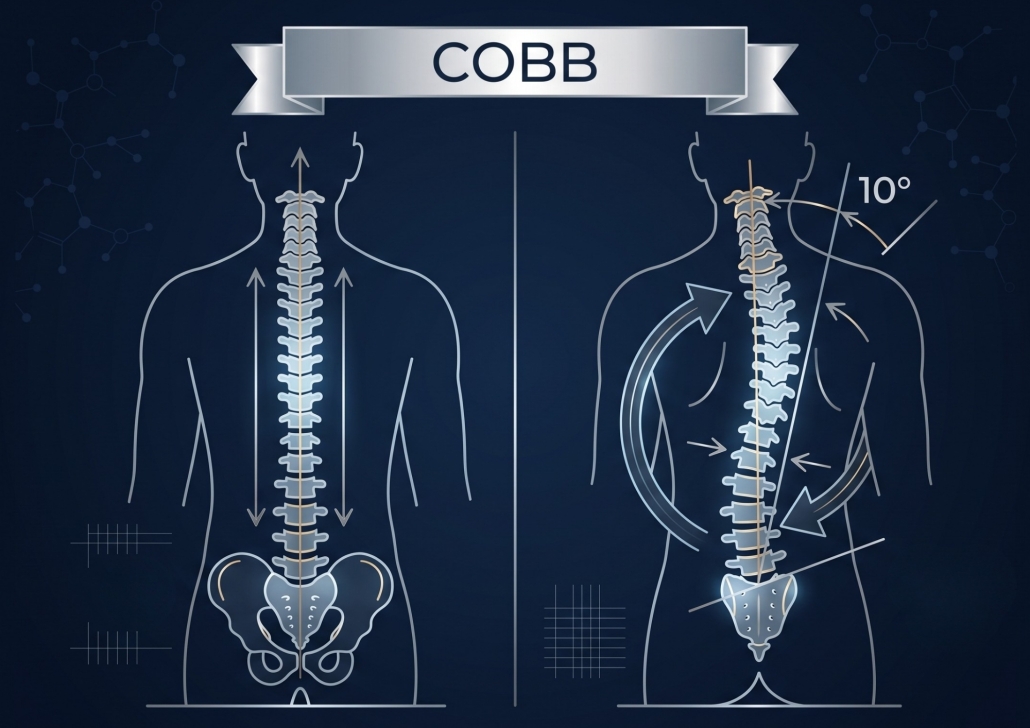
The international measurement unit used worldwide to determine the severity of scoliosis is called the Cobb Angle. This measurement is calculated by measuring the angle between the uppermost vertebra where the curvature begins and the lowermost vertebra where it ends on an X-ray.

This angle gives us the "identity" of scoliosis. All classifications we discuss when following up our patients are made according to this degree.

Degrees and Classification of Scoliosis

Medically, not all spinal curvatures are assessed in the same category. We can examine the degrees of curvature under four main headings:

1. Spinal Asimetri (0 – 10 Derece Arası)

It is the most misunderstood group among the public. Many parents assume their child has scoliosis when the report states "7 degrees of curvature". However, according to medical literature, curvatures below 10 degrees are not considered scoliosis.

  • Meaning: This is not a disease, but a condition of "postural asymmetry" or "non-structural curvature".
  • Clinical Approach: It usually does not require treatment and can also be seen in healthy individuals. Monitoring is sufficient.

2. Mild Scoliosis (10–20 degrees)

When the Cobb angle exceeds 10 degrees, the diagnosis is officially termed "Scoliosis".

  • Meaning: There is a slight curvature in the spine. It is difficult to detect from the outside through clothing.
  • Clinical Approach: This group is the "Observation Group". The progression of the curvature is monitored at regular intervals according to the child's growth rate.

3. Moderate Scoliosis (20–40 degrees)

This stage is when the physical symptoms of scoliosis (uneven shoulders, hump in the back) begin to be more clearly visible from the outside.

  • Meaning: The curvature is now evident not only on X-rays but also in physical appearance. In growing children, these degrees represent the range where the risk of progression is highest (the "risk zone").
  • Clinical Approach: This stage is the period during which non-surgical measures (such as corsets and exercises) are most intensively evaluated. The aim is to prevent the curvature from progressing to a higher category.

4. Advanced Scoliosis (40 Degrees and Above)

Curvatures of 40-45 degrees and above are referred to as "Advanced" or "Severe Scoliosis".

  • Meaning: At this point, the biomechanics of the spine and body balance are significantly affected.
  • Klinik Etki: It is not merely an aesthetic issue; in very advanced cases reaching 70-80 degrees, the rib cage volume may decrease, potentially putting pressure on respiratory capacity. These degrees of curvature represent structural changes that require detailed planning by spinal surgeons.

More Important Than Numbers: "The Risk of Progress"

The most important detail a family needs to know is this: The child's age is as important as the degree of scoliosis.

For example;

  • In an individual whose growth is complete (18 years old), a 20-degree scoliosis generally remains stable and does not pose a threat to life.
  • However, a 20-degree scoliosis detected in a child aged 10 who is still in the early stages of their growth spurt carries a significant potential for progression.

Therefore, the number in the report does not mean anything on its own. Your doctor will interpret this number in conjunction with your child's bone age (Risser stage).


Frequently Asked Questions (FAQ)

Does the degree of scoliosis decrease on its own over time? In structural scoliosis (where the bones twist and bend), it is not medically expected that the degree of curvature will spontaneously "resolve" or decrease. However, with the correct exercises and posture corrections, "functional" (posture-related) increases can be reversed, which may appear as a partial improvement in the degree.

Does mild scoliosis cause pain? Interestingly, there is no direct correlation between the degree of scoliosis and the severity of pain. Someone with a 15-degree curvature may experience back pain, while another with a 50-degree curvature may feel no pain at all. Pain usually stems from muscle imbalance.

Can I measure the temperature at home? Home observations (forward bending test) only allow you to detect asymmetry. This degree, known as the Cobb angle, can only be measured on X-rays by specialist doctors using millimetric calculations. Measurements taken using mobile phone applications may be misleading.

Legal Notice: This content is for informational purposes only. It is not a substitute for diagnosis and treatment. Consult your doctor if you have any health concerns.

Instagram: Prof.Dr.Çağatay Öztürk

Contact: click here

Scoliosis (spinal curvature), one of the most common spinal deformities, is a structural problem that is particularly seen in children during their growth phase and can be progressive in nature. As Prof. Dr. Çağatay Öztürk, we frequently emphasise in our spinal surgery practice that the key to successful scoliosis management is detecting the deformity before it reaches surgical limits.

In this article, we will discuss how parents should interpret changes in their children's posture and examine the medical symptoms of scoliosis in light of current literature.

The Medical Difference Between Postural Deformity and Scoliosis

Two concepts that are often confused by parents are "postural disorder" and "scoliosis". Medically, the distinction between these two conditions is clear:

  • Functional Postural Disorders: It is usually due to muscle weakness, habits or psychological factors. When alerted, the child can straighten their spine.
  • Structural Scoliosis: It is a condition where the spine bends more than 10 degrees to the side and simultaneously rotates around its own axis. This is an anatomical deformity and cannot be corrected by the child's voluntary movement.

Scoliosis may appear to be a simple posture disorder when viewed from the outside; however, the underlying rotational movement causes asymmetries in the rib cage and back.

The 5 Key Physical Symptoms of Scoliosis

The type we refer to as Adolescent Idiopathic Scoliosis (AIS), which occurs between the ages of 10 and 18, is generally painless. Therefore, monitoring physical findings is of vital importance. The key asymmetries parents should look out for when observing their children are as follows:

  1. Shoulder Level Difference: When the child looks across, one shoulder is positioned higher than the other.
  2. Scapula (Shoulder Blade) Prominence: When viewed from behind, one shoulder blade protruding or being more prominent than the other.
  3. Waist Curve Asymmetry: When the arms are relaxed at the sides of the body, the distance between the arm and the waist (waist triangle) is not equal on the right and left sides.
  4. Pelvic (Pelvic Bone) Imbalance: The appearance of the hip being shifted to one side or the feeling of unequal leg lengths (false shortness).
  5. Body Shift: The head not being directly above the centre of the pelvis, the torso leaning to the right or left.

Scoliosis Home Screening Method: Adam's Forward Bend Test

The Adam's Forward Bend Test, which we routinely perform during clinical examinations, can be used by families as a preliminary screening method at home.

Application: The child's feet are together, knees bent and legs stretched out in front. Arms are left hanging freely down. Evaluation: The parent should look at the child's back surface from behind. If a height or bump (rib hump) is noticed on one side of the spine (usually on the right back or left waist area) compared to the other side, this is a strong indicator of spinal rotation.

This finding, while not a definitive diagnosis, is the most important indicator that a spinal surgeon should be consulted for further examination and X-ray imaging.

Why is Early Diagnosis Important in Scoliosis?

The decisive factors in the treatment of scoliosis are the degree of curvature (Cobb angle) and the child's remaining growth potential (Risser stage). In a child whose growth plates are still open, low-grade curvatures can be controlled with brace treatment and specific exercises. However, in cases that are detected late and have progressed (over 45-50 degrees), surgical intervention may be necessary.

Scientific data indicates that conservative (non-surgical) methods have a higher success rate in cases of scoliosis detected at an early stage. Therefore, if any of the physical symptoms mentioned above are suspected, seeking expert advice is the most appropriate approach rather than adopting a "it will improve over time" attitude.


Frequently Asked Questions (FAQ)

Does scoliosis cause pain? Scoliosis during adolescence is largely painless. This can lead to the insidious progression of the disease. Pain is more commonly seen in degenerative scoliosis in adulthood or in cases of severe curvature. The absence of pain does not mean that scoliosis is not present.

Does carrying a heavy school bag cause scoliosis? In current medical literature, there is no evidence that carrying heavy bags directly causes structural scoliosis (curvature of the spine). However, heavy loads can lead to postural disorders and back pain. For spinal health, the weight of the bag should not exceed 10-15% of body weight.

Can children diagnosed with scoliosis participate in sports? Yes, people with scoliosis are encouraged to lead an active lifestyle. Swimming and exercises that strengthen the spinal muscles are beneficial for overall fitness. However, for professional-level sports and activities appropriate to the degree of curvature, you must consult your doctor.

Call Now Button