Brace treatment for scoliosis may be considered, particularly in some children and adolescents during their growth phase, to reduce the risk of the curvature progressing. The decision to use a brace is based on the patient’s age, growth potential, Cobb angle, type of curvature, and whether the curvature has progressed during follow-up visits. Not every patient with scoliosis requires a brace.
This article explains, for general informational purposes, the circumstances under which brace treatment may be considered for scoliosis, the purpose of the brace, the process of using it, and important points to keep in mind.
What Is a Scoliosis Brace?
A scoliosis brace is a custom-fitted external support device used to reduce the risk of progression of spinal curvature. It is typically considered for some scoliosis patients who are still growing.
The purpose of a brace is often not to completely correct an existing curvature. The primary goal is to help control the progression of the curvature, especially while the child is still growing.
For Which Patients Is Corset Therapy Considered?
Brace therapy is not used for every patient with scoliosis. It may be considered, particularly for patients who are still growing and are at risk of further curvature progression.
| Factor Under Evaluation | Why Is It Important? |
|---|---|
| The patient's age | If the growth continues, the risk of the curvature progressing is monitored more closely. |
| Cobb angle | It indicates the degree of curvature and affects the follow-up plan. |
| Growth potential | The risk of progression may vary in patients whose bones are still developing. |
| Type of curvature | The location and shape of the curvature may influence the treatment approach. |
| Whether or not there is an increase in the number of followers | An increase in the Cobb angle may prompt a corset evaluation. |
| Clinical findings | Posture, shoulder-hip asymmetry, pain, or functional impairment are assessed. |
Does a Brace Completely Correct Scoliosis?
The primary goal of bracing treatment for scoliosis is not always to completely correct the curvature. Especially in patients who are still growing, the goal is to help slow the progression of the curvature or keep it under control.
For this reason, the notion that “a brace will definitely correct scoliosis” is incorrect. The effectiveness of brace treatment depends on the patient’s growth status, the degree of curvature, compliance with brace wear, and regular follow-up.
Why Is the Cobb Angle Important in a Brace Decision?
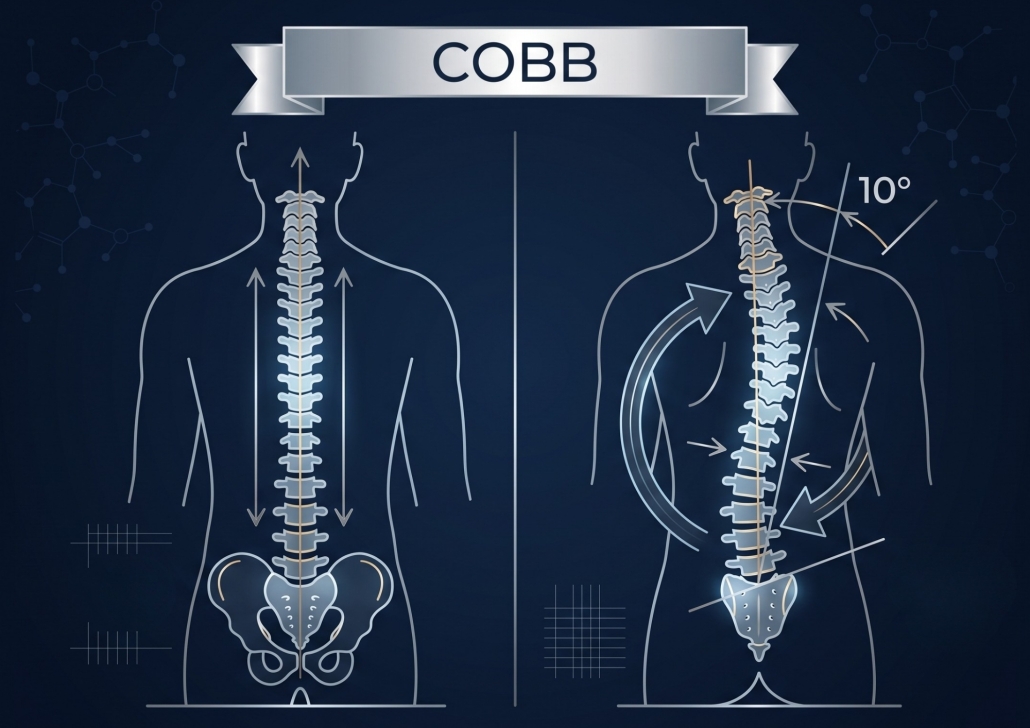
The Cobb angle is one of the primary methods used to measure the degree of a scoliosis curve on an X-ray. The Cobb angle is an important factor when evaluating brace treatment; however, it is not sufficient on its own to make a decision.
The treatment approach may differ between two patients with the same Cobb angle. For example, while the risk of progression is monitored more closely in a growing patient, the same degree may be assessed differently in an adult patient.
| Cobb Angle / Condition | Overall Assessment | Possible Approach |
|---|---|---|
| Slight curvatures | Tracking may be a priority | Regular checkups and posture assessments can be performed. |
| Moderate curvatures | The risk of progression is assessed | If the growth continues, a brace may be considered. |
| Curvature showing an increase over time | Closer monitoring may be necessary | The treatment plan may change based on the doctor's assessment. |
| Advanced Curvatures | A more detailed assessment is needed | Various options, including surgical evaluation, can be considered. |
Brace Therapy for Children and Adolescents
One of the most important considerations in monitoring scoliosis in children and adolescents is whether growth is still ongoing. This is because spinal curvature can change over time during the growth period.
Brace therapy may be considered, particularly for certain patients who still have growth potential and are at risk of progression of their scoliosis. Regular follow-up visits, radiographic measurements, and clinical evaluations are important during this process.
Korse Kullanım Süresi Nasıl Belirlenir?
Korse kullanım süresi her hasta için aynı değildir. Kullanım süresi; eğriliğin derecesi, büyüme durumu, korse tipi, tedavi hedefi ve hekimin takip planına göre belirlenir.
Bazı hastalarda günün belirli saatlerinde kullanım önerilebilirken, bazı hastalarda daha uzun süreli kullanım gerekebilir. Korse planı mutlaka hastaya özel oluşturulmalıdır.
Korse Kullanırken Nelere Dikkat Edilmeli?
Korse tedavisinde düzenli kullanım ve takip önemlidir. Korse uygun şekilde kullanılmadığında beklenen etki azalabilir. Ayrıca cilt problemleri, uyum zorluğu veya günlük yaşamla ilgili sorunlar takip sırasında hekimle paylaşılmalıdır.
| Dikkat Edilecek Nokta | Description |
|---|---|
| Düzenli kullanım | Korse hekimin önerdiği plana uygun kullanılmalıdır. |
| Cilt kontrolü | Bası, kızarıklık veya yara oluşumu takip edilmelidir. |
| Kontrol randevuları | Eğriliğin ilerleyip ilerlemediği düzenli izlenmelidir. |
| Egzersiz uyumu | Hekim uygun görürse egzersiz programı destekleyici olabilir. |
| Psikolojik uyum | Özellikle ergenlerde korse kullanımı sosyal ve duygusal açıdan zorlayıcı olabilir. |
| Korse ayarı | Büyüme veya kilo değişikliklerinde korse yeniden değerlendirilebilir. |
Korse Kullanırken Egzersiz Yapılır mı?
Skolyozda egzersiz; kas dengesi, duruş farkındalığı, hareketlilik ve genel fiziksel kondisyon açısından destekleyici olabilir. Ancak egzersiz programı hastanın durumuna göre planlanmalıdır.
Korse kullanan hastalarda egzersiz yaklaşımı; eğriliğin tipi, hastanın yaşı, korse kullanım süresi ve klinik değerlendirmeye göre belirlenmelidir. Her egzersiz her hasta için uygun olmayabilir.
Korse Tedavisi Başarısız Olursa Ne Olur?
Korse tedavisi sırasında eğrilik ilerlemeye devam edebilir. Böyle bir durumda takip planı yeniden değerlendirilir. Korse kullanım süresi, uyum durumu, eğriliğin tipi, Cobb açısındaki değişim ve büyüme durumu birlikte ele alınır.
İleri dereceli veya ilerleyici skolyozlarda cerrahi değerlendirme gündeme gelebilir. Ancak bu karar yalnızca dereceye göre değil, hastanın genel klinik durumu dikkate alınarak verilir.
Erişkin Skolyozunda Korse Kullanılır mı?
Erişkin skolyozunda korse kullanımı çocuk ve ergen skolyozundan farklı değerlendirilir. Erişkinlerde korse çoğunlukla eğriliği düzeltmek amacıyla değil, bazı hastalarda ağrı kontrolü veya destek amacıyla gündeme gelebilir.
Erişkin skolyozunda tedavi planı; ağrı, sinir basısı, duruş bozukluğu, omurga dengesi ve günlük yaşam etkilenimine göre oluşturulur.
When Should You See a Doctor?
It may be appropriate to consult the Department of Orthopedics and Traumatology in the following situations:
| Situation | Why Should It Be Evaluated? |
|---|---|
| Skolyoz tanısı konmuş ve takip önerilmişse | Eğriliğin ilerleyip ilerlemediği izlenmelidir. |
| Omuz veya kalça asimetrisi belirginleşiyorsa | Omurga dengesinde değişiklik olabilir. |
| Cobb açısında artış varsa | Tedavi planı yeniden değerlendirilebilir. |
| If the child is going through a period of rapid growth | İlerleme riski açısından takip önemlidir. |
| Korse kullanımı zorlaşıyorsa | Uyum, cilt ve kullanım süresi gözden geçirilmelidir. |
| Ağrı veya fonksiyon kaybı varsa | Any accompanying spinal problems can be evaluated. |
Frequently Asked Questions (FAQ)
Skolyoz korsesi ne işe yarar?
Skolyoz korsesi, özellikle büyüme çağındaki bazı hastalarda eğriliğin ilerleme riskini azaltmak amacıyla değerlendirilebilir. Amacı çoğu zaman eğriliği tamamen düzeltmek değil, ilerlemeyi kontrol altında tutmaya yardımcı olmaktır.
Skolyozda korse her hastaya gerekir mi?
Hayır. Korse tedavisi her skolyoz hastası için gerekli değildir. Karar; hastanın yaşı, Cobb açısı, büyüme durumu, eğriliğin ilerleme riski ve klinik değerlendirmeye göre verilir.
Korse skolyozu tamamen düzeltir mi?
Korse tedavisi skolyozu her zaman tamamen düzeltmez. Özellikle büyüme çağında temel amaç eğriliğin ilerlemesini azaltmak veya durdurmaya yardımcı olmaktır.
Is a brace necessary for a 10-degree scoliosis?
10 derece skolyoz genellikle hafif eğrilik grubunda değerlendirilir. Bu derecede çoğu zaman takip ön plandadır. Ancak karar hastanın yaşı, büyüme durumu ve eğriliğin ilerleme riskine göre verilmelidir.
Korse kaç saat kullanılmalıdır?
Korse kullanım süresi her hasta için aynı değildir. Süre; eğriliğin derecesi, büyüme durumu, korse tipi ve hekimin tedavi planına göre belirlenir.
Korse kullanırken spor yapılabilir mi?
Bazı hastalarda günlük aktivite ve egzersizler sürdürülebilir. Ancak spor ve egzersiz planı hastanın klinik durumuna ve hekimin önerisine göre belirlenmelidir.
Erişkin skolyozunda korse kullanılır mı?
Erişkin skolyozunda korse genellikle eğriliği düzeltmek amacıyla değil, bazı hastalarda destek veya ağrı kontrolü amacıyla değerlendirilebilir. Tedavi planı kişiye özel yapılmalıdır.
Information Note
This article is intended to provide general health information. It is not a substitute for diagnosis or treatment. The diagnosis, follow-up, and treatment plan for scoliosis are determined based on a physician’s examination, radiological evaluation, and the patient’s clinical condition.
Related Pages
- Scoliosis Treatment and Surgical Evaluation
- 10 derece skolyoz nedir?
- Symptoms of scoliosis
- Degrees of scoliosis and the Cobb angle
- What happens if scoliosis progresses?
- Kyphosis
- Guide to Spinal Curvature
- Contact Information
Bibliography
Bu içerik hazırlanırken skolyozda korse tedavisi, büyüme çağında eğrilik takibi, Cobb açısı ve cerrahi dışı tedavi seçenekleriyle ilgili genel kabul görmüş hasta bilgilendirme ve akademik kaynaklardan yararlanılmıştır.
- American Academy of Orthopaedic Surgeons — OrthoInfo: Nonsurgical Treatment Options for Scoliosis
- American Academy of Orthopaedic Surgeons — OrthoInfo: Idiopathic Scoliosis in Children and Adolescents
- Scoliosis Research Society: Adolescent Idiopathic Scoliosis — A Handbook for Patients
- NHS: Scoliosis Treatment in Children
- NHS: Scoliosis Treatment in Adults
- 2016 SOSORT Guidelines: Orthopaedic and Rehabilitation Treatment of Idiopathic Scoliosis During Growth