 https://drcagatayozturk.com/wp-content/uploads/skolyozda-korse-tedavisi.jpg
1591
2250
Cagatay Ozturk
https://drcagatayozturk.com/wp-content/uploads/hocamavilogo.png
Cagatay Ozturk2026-07-13 16:17:582026-07-13 16:19:34When Is Brace Treatment Considered for Scoliosis?
https://drcagatayozturk.com/wp-content/uploads/skolyozda-korse-tedavisi.jpg
1591
2250
Cagatay Ozturk
https://drcagatayozturk.com/wp-content/uploads/hocamavilogo.png
Cagatay Ozturk2026-07-13 16:17:582026-07-13 16:19:34When Is Brace Treatment Considered for Scoliosis?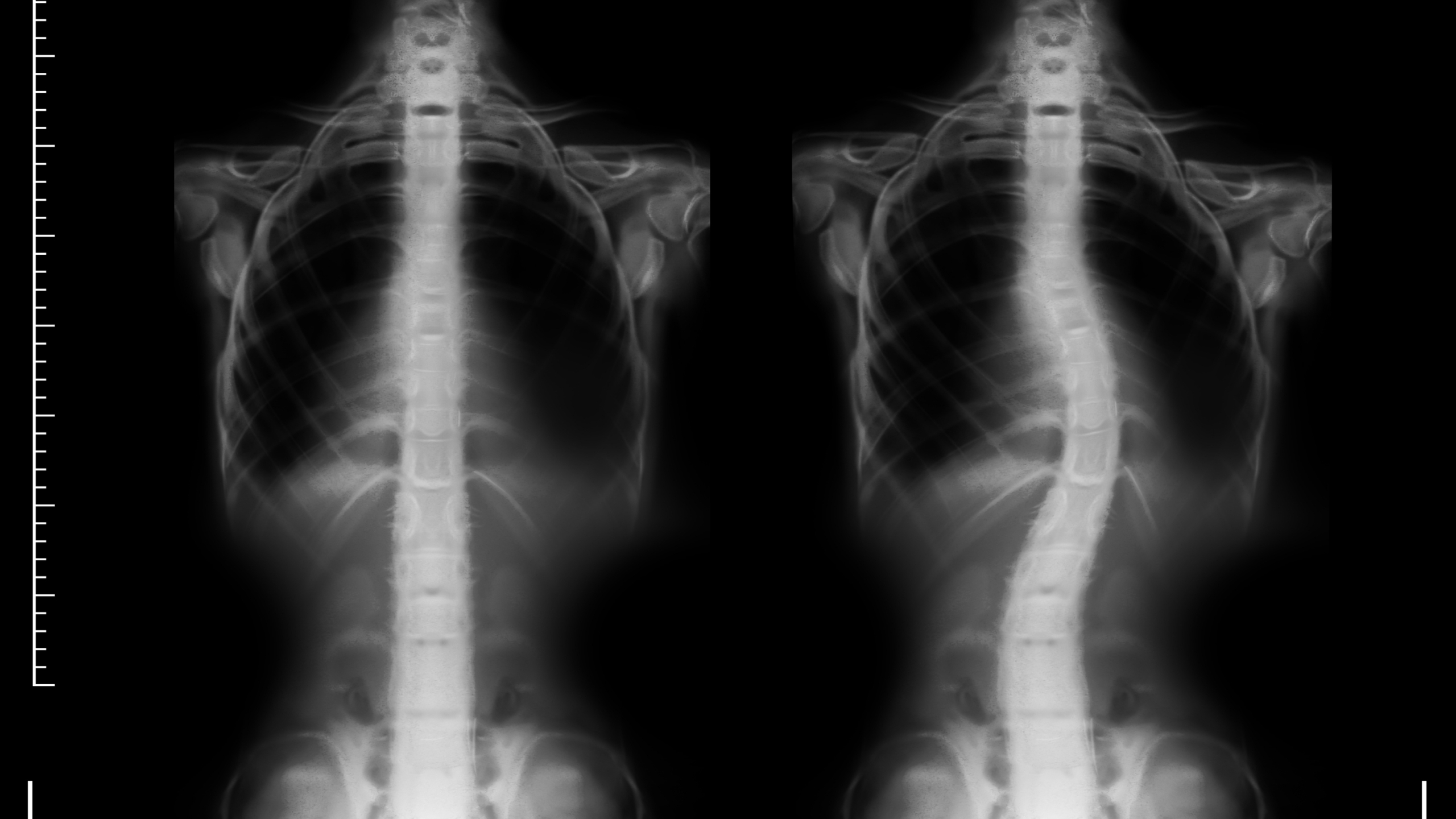
Skolyoz belirtileri; omuz seviyesinde eşitsizlik, kalça asimetrisi, sırtta veya belde eğrilik görünümü, bir kürek kemiğinin daha belirgin olması ve duruş bozukluğu şeklinde fark edilebilir. Skolyoz tanısı yalnızca dış görünümle kesinleşmez; klinik muayene ve gerekli görüldüğünde radyolojik değerlendirme ile belirlenir.
Scoliosis is a three-dimensional spinal deformity characterised by a lateral curvature of the spine. Whilst a healthy spine appears as a straight line when viewed from the back, in scoliosis this structure curves to the right or left, and the vertebrae often rotate around their own axis as well. This condition is not merely an aesthetic issue; it is also a serious health problem that can affect respiratory function and quality of life in advanced cases.
Although scoliosis is usually detected during childhood and adolescence, it can occur at any age. The course of the condition varies from person to person, and early diagnosis has a direct impact on the success of treatment.
What is Scoliosis?
Scoliosis is a complex spinal condition characterised by a lateral curvature of the spine in the frontal plane, accompanied by rotation of the vertebrae. This curvature is typically described as ‘S’- or ‘C’-shaped.
The spine normally has certain physiological curves. However, in scoliosis, these curves become abnormal and the balance of the spine is disrupted. This condition can affect not only the bony structure but also the muscles, ligaments and the nervous system.
When scoliosis is mild, it may often cause no symptoms. However, as the curvature progresses, both physical appearance and functional problems may arise.
What are the symptoms of scoliosis?
The symptoms of scoliosis usually develop gradually and can be difficult to detect in the early stages. However, with careful observation, certain physical changes can be identified.
The most common symptoms of scoliosis are as follows:
unevenness at shoulder level
one shoulder blade being more prominent than the other
asymmetry at the waist
one hip being higher than the other
the head appearing to be off-centre in relation to the body
noticing a curvature in the spine when bending forward
In cases of severe scoliosis, however:
back and lower back pain
muscle fatigue
shortness of breath
reduced exercise capacity
gibi belirtiler de ortaya çıkabilir.
The symptoms of scoliosis should be checked regularly, particularly in children during their growth spurt. This is because the curvature can progress rapidly during this period.
What causes scoliosis?
The causes of scoliosis fall into different categories. The most common type of scoliosis is idiopathic scoliosis, but there are also other types of scoliosis caused by different factors.
Idiopathic Scoliosis
It is the most common type of scoliosis and accounts for the vast majority of cases. The exact cause is unknown. It usually develops during adolescence and tends to progress as the patient grows.
Congenital Scoliosis
It is caused by abnormalities that occur during the development of the spine in the womb. It arises as a result of missing or malformed vertebrae.
Neuromuscular Scoliosis
It develops as a result of disorders of the muscular and nervous systems. For example, conditions such as cerebral palsy or muscular dystrophy can cause scoliosis.
Degenerative Scoliosis
It arises as a result of degenerative changes in the spine that occur in adulthood. Deterioration of the disc structure and a reduction in spinal stability may be the cause of this condition.
How is scoliosis diagnosed?
Scoliosis is diagnosed through a physical examination and imaging tests. Early diagnosis is of great importance in controlling the progression of the condition.
Physical Examination
The doctor assesses the patient’s posture and spinal structure. One of the most commonly used tests is the Adam’s Forward Bend Test. In this test, the patient bends forwards and the curvature of the spine is observed.
X-ray
It is the most important imaging method used in the diagnosis of scoliosis. X-rays are used to measure the degree of curvature in the spine.
Cobb Angle
This measurement is used to determine the severity of scoliosis. Based on this angle:
10–20 degrees: mild
20–40 degrees: moderate
Over 40 degrees: severe scoliosis
is considered to be.
Types of Scoliosis
Scoliosis is classified not only according to its cause, but also according to the shape and location of the curvature.
Thoracic scoliosis (upper back)
Lumbar scoliosis (lower back)
Thoracolumbar scoliosis
Double-curved scoliosis
This classification plays a significant role in determining the treatment plan.
How is scoliosis treated?
Treatment for scoliosis is planned based on factors such as the patient’s age, the degree of curvature and the risk of progression.
Observation (Monitoring)
In cases of mild scoliosis, regular monitoring may be sufficient. Children, particularly those still growing, are checked at regular intervals.
Physiotherapy and Exercise
Exercises designed to strengthen the muscles around the spine may be recommended. These exercises will not completely correct scoliosis, but they may slow its progression.
Corset Therapy
In cases of moderate scoliosis, a brace is used to prevent the curvature from progressing. Brace treatment is particularly effective in individuals who are still growing.
Surgical Treatment
İleri dereceli skolyoz vakalarında cerrahi müdahale gerekebilir. Bu operasyonlarda omurga düzeltilir ve sabitlenir.
How Can the Progression of Scoliosis Be Prevented?
Early diagnosis and regular monitoring are the most important factors in preventing the progression of scoliosis.
Points to note:
regular check-ups
performing the recommended exercises
adapting to the use of a corset
correction of posture habits
These measures are particularly important for individuals during their growth years.
Scoliosis and Daily Life
People with scoliosis may face certain challenges in their daily lives. However, with appropriate treatment and lifestyle adjustments, these effects can be minimised.
correct sitting and posture habits
regular exercise
Avoid carrying heavy loads
ergonomic working environment
This is important during this process.
When Should You Apply for a Doctorate?
It is recommended that you consult a specialist in the following circumstances:
a marked difference at shoulder and hip level
Visible curvature of the spine
an increase in poor posture
persistent back or lower back pain
Early diagnosis plays a critical role in managing scoliosis.
Our Articles on Scoliosis
https://drcagatayozturk.com/wp-content/uploads/skolyozda-korse-tedavisi.jpg
1591
2250
Cagatay Ozturk
https://drcagatayozturk.com/wp-content/uploads/hocamavilogo.png
Cagatay Ozturk2026-07-13 16:17:582026-07-13 16:19:34When Is Brace Treatment Considered for Scoliosis? https://drcagatayozturk.com/wp-content/uploads/10-derece-skolyoz.jpg
1414
2000
Cagatay Ozturk
https://drcagatayozturk.com/wp-content/uploads/hocamavilogo.png
Cagatay Ozturk2026-07-10 14:06:082026-07-10 14:31:27What Is a 10-Degree Scoliosis? Does It Require Follow-Up?
https://drcagatayozturk.com/wp-content/uploads/10-derece-skolyoz.jpg
1414
2000
Cagatay Ozturk
https://drcagatayozturk.com/wp-content/uploads/hocamavilogo.png
Cagatay Ozturk2026-07-10 14:06:082026-07-10 14:31:27What Is a 10-Degree Scoliosis? Does It Require Follow-Up? https://drcagatayozturk.com/wp-content/uploads/skolyoz-duzelir-mi.jpg
1414
2000
Cagatay Ozturk
https://drcagatayozturk.com/wp-content/uploads/hocamavilogo.png
Cagatay Ozturk2026-06-08 19:56:292026-06-08 19:58:06Can Scoliosis Be Corrected? Does Spinal Curvature Go Away Completely?
https://drcagatayozturk.com/wp-content/uploads/skolyoz-duzelir-mi.jpg
1414
2000
Cagatay Ozturk
https://drcagatayozturk.com/wp-content/uploads/hocamavilogo.png
Cagatay Ozturk2026-06-08 19:56:292026-06-08 19:58:06Can Scoliosis Be Corrected? Does Spinal Curvature Go Away Completely?Frequently Asked Questions About Scoliosis
Does scoliosis ever go away completely?
Scoliosis may not disappear completely, but it can be managed with appropriate treatment.
Is scoliosis surgery risky?
As with any surgical procedure, there are risks involved, but successful outcomes can be achieved using the appropriate techniques.
Does scoliosis prevent you from doing sport?
Most people with scoliosis can take part in sports that do not strain the spine, provided they follow a suitable exercise programme.
Does scoliosis cause pain?
In mild cases, there is usually no pain, but pain may occur in more severe cases.
Expert Opinion
Prof. Dr. Çağatay Öztürk is an orthopaedic and trauma surgeon specialising in spinal surgery. Early diagnosis and appropriate treatment planning for spinal conditions such as scoliosis are of great importance in preventing the progression of the condition.